Digitalizing Waste for Traceability: Interview with SMX
The Asia Pacific is home to some of the world’s fastest-growing economies and some of the largest plastic waste generators. Countries such as Indonesia, India and the Philippines top global marine pollution rankings, while Singapore incinerates over 90% of its plastic waste. Despite regional efforts to boost education and investments into recycling infrastructure, traceability continues to remain a key obstacle. Without credible proof of origin for recycled content by accredited organizations, traceability and reliability of recycled plastic streams are at stake, given greenwashing claims plaguing the industry.
At the same time, Extended Producer Responsibility or EPR policies are tightening across the region, as companies are required to meet post-consumer recycled or PCR content mandates with aggressive targets ranging from 25% to 50% by 2030. However, brands and producers are struggling to prove compliance if they are unable to verify the origin of these recycled feedstocks.
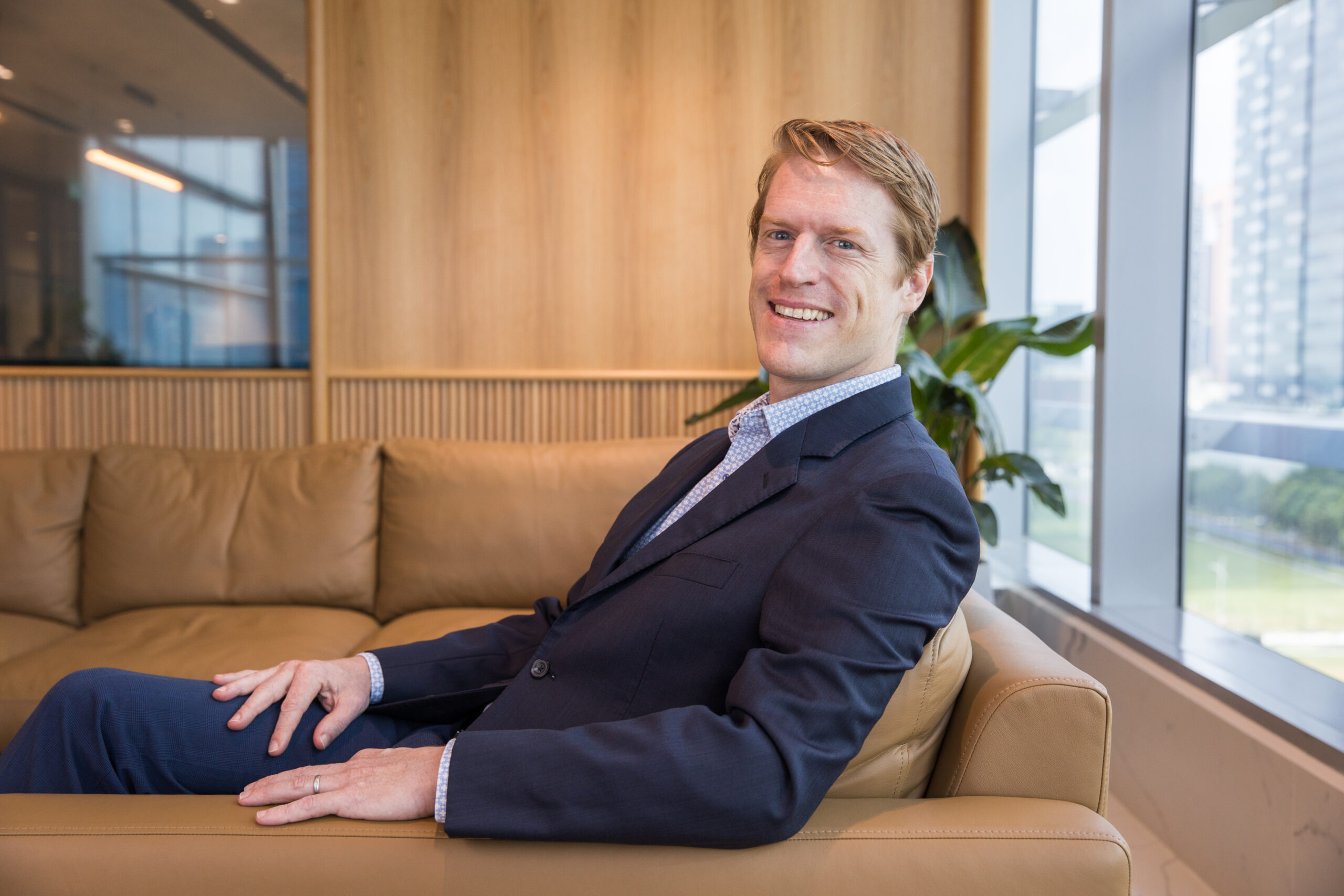 Thus, establishing traceability is now on the agenda. With its patented molecular marking technology and blockchain-enabled traceability platform, Nasdaq-listed Security Matters or SMX is helping to transform recycled plastics from a regulatory headache into a verified, monetizable asset. In an interview with OPIS, Tom Enger, chief sustainability officer at SMX, explained how the company is using blockchain technology to address the traceability gap in recycled plastics.
OPIS: What is your assessment of the recycled plastics market in APAC?
SMX: The region is no longer taking its cue from Europe; it’s setting the pace. Singapore, for example, still incinerates 94% of its plastic and recycles just 6%. That reveals enormous potential for improvement. Our joint initiative with government agency A*STAR embeds molecular markers in resin and records every transfer on-chain. The roadmap targets a 30% increase in recycling rates and a 50% cut in landfill and incineration volumes by 2030.
Once this system is replicated across ASEAN, we estimate an addressable market worth around S$4.2 ($3.11) billion annually in certified recycled materials and associated platform revenues. With recycled-content mandates and packaging pledges converging on 25–50% PCR, we expect sustained double-digit growth in demand, especially for traceable, food-grade and regulated packaging applications where provenance is now a legal requirement.
OPIS: How is demand for recycled plastics evolving across APAC, and what industries are driving it?
SMX: Fast-moving consumer goods, food-grade packaging, electronics and automotive interiors are all leading the charge across markets like China, India, Indonesia, Japan and Singapore. These sectors are no longer waiting for regulation; they’re setting minimum PCR thresholds in procurement.
Traceability is no longer a “nice-to-have.” It’s now risk insurance. It protects against compliance fines, import rejections, and reputational damage, especially as EPR frameworks go from voluntary to mandatory. For example, Singapore’s deposit-return scheme launching in 2026 is expected to dramatically increase rigid packaging volumes, while flexible packaging demand is accelerating due to e-commerce growth in India and Indonesia.
OPIS: What role does the Asia Pacific play in advancing circularity globally?
SMX: APAC is in a unique position to leapfrog legacy systems. Singapore, through A*STAR, has taken the lead by fusing digital traceability with green finance. This is inspiring regional neighbors like Indonesia, Thailand and the Philippines to follow suit. We’re seeing strong momentum around Industry 5.0, where data, sustainability and financial incentives converge.
OPIS: What impact have regulations had on demand and pricing for recycled plastics?
SMX: Where regulation is enforced, certified PCR now trades at a 5–15% premium over virgin. It’s no longer just about pellets, it’s about audit-ready data.
In Singapore, our data shows that diverting one-third of the country’s plastic waste from incineration would avoid around S$27 million in disposal fees and generate certified PCR worth roughly the same. That’s a potential annual upside of S$75 million.
Europe provides a benchmark: in 2024, food-grade recycled polyethylene terephthalate or rPET traded at a €400 ($464)/ metric ton premium over virgin PET because brands had to meet single-use plastic targets. Southeast Asia is now on the same curve. We see certified recycled high-density polyethylene or rHDPE already trading above virgin HDPE due to enforcement and brand commitments.
OPIS: What are the biggest challenges to scaling recycled plastics adoption across Asia?
SMX: The obstacles are real:
- Infrastructure gaps: Most Southeast Asian MRFs still lack advanced sorters.
- Data blackouts: Informal collection networks rarely generate usable chain-of-custody records.
- Policy fragmentation: Countries differ on tariff codes and PCR definitions.
- Public perception: Plastics are still vital for food security, healthcare and affordable housing. The issue isn’t plastic, it’s efficiency.
That’s where traceability can make a difference, turning waste from a liability into a certified asset.
OPIS: Chemical recycling was once seen as the future. Where does it stand today?
SMX: Chemical recycling has largely failed to deliver on scale. It’s too capital-intensive, too carbon-heavy and too expensive. Pyrolysis plants cost $3,500-7,500 per metric ton of annual capacity and emit up to 2.9 kg CO₂ per kg of output, nine times the emissions of mechanical recycling.
Meanwhile, mechanical recycling has become cleaner, cheaper and more efficient. New polymer designs now allow two to five mechanical loops with minimal degradation. Combine that with our SMX traceability stack, and suddenly mechanical recycling becomes a premium product.
OPIS: Can you explain how SMX’s traceability and verification process works?
SMX: We embed a food-safe, invisible molecular marker at the resin stage and re-mark recovered flake. Every hand-off is logged on our permissioned blockchain, recording origin, grade and PCR percentage. This enables real-time verification for customs and regulators, documentary proof for auditors and insurers, and a new financial instrument, which we call the Plastic Cycle Token, a next-generation environmental credit that combines molecular marking with blockchain traceability across the entire plastic value chain.
Each verified kilogram of recycled plastic becomes a tradable asset, turning compliance costs into measurable yield and reputational security.
Unlike traditional plastic credits limited to end-of-life waste collection, the PCT turns the liability of virgin plastic reduction into an auditable, real-economy digital asset. With transparent on-exchange credit pricing, long-term volume commitments by industry and catalytic financing with sustainability-linked bonds, the right incentive structures are established for sustainable plastic recycling as a normal, market-supported system.
This is not just about every organization worldwide taking responsibility for plastic waste impact and societal costs, through plastic footprint offsetting—which has to be distinct from greenhouse gas offsets. It is about building the necessary infrastructure for accountable, robust and data-driven circularity that policymakers, investors and society urgently need to address our existential plastic waste and health crisis.”
OPIS: What key projects or partnerships are you leading in the region?
SMX: Our flagship project is the A*STAR–SMX Joint Plastics Circularity Project in Singapore. It’s already drawing participation from global beverage brands and regional packaging converters. We’re also rolling out similar pilots in Tokyo, Abu Dhabi, Dubai, Germany and the U.K. through memoranda of understanding with major players.
If just 10% of the plastic waste in Singapore, Malaysia and Indonesia were shifted into SMX-verified recycling streams, the region could unlock $286-400 million per year in credit value and $6.9-9.3 million in exchange-traded platform fees.
The upcoming listing of the Plastic Cycle Token will crystallize this value and give brands and investors direct exposure to real-world circularity.
OPIS: How will SMX bridge the gap between recyclers, manufacturers and regulators in Asia?
SMX: The current model delivers a “triple negative”: money spent on disposal, land sacrificed to ash and landfill, and zero return on investment. SMX flips that.
We turn waste into certified digital assets, and traceability into capital flow. Governments earn compliance dividends. Brands meet regulatory thresholds. Cities get cleaner.
This is what we call the “revolution of responsibility.” It starts with plastics, but scales to every critical material in the economy.
OPIS: What are SMX’s strategic priorities for the next 12–18 months?
SMX:
- Scale A*STAR protocols across five Southeast Asian recyclers .
- Launch the first Plastic Cycle Token on a main board exchange.
- Release open Application Programming Interfaces (APIs) for border agencies to verify PCR in seconds.
- Expand our marketplace in Southeast Asia and unlock S$4.2 billion in annual platform value.
- Extend our technology to critical materials – gold, silver, rare earths and other industries, such as automotives.